Category: Life

  • Ingredients and Technique

    We’ve had a few houseguests recently, which is odd considering we just moved and we have ripped out our kitchen so we don’t really have the infrastructure for houseguests. We’ve been taking our guests to local eateries, including Zingerman’s Roadhouse.

    The other night, I ordered a Classic Martini at Zingerman’s Roadhouse. It’s one of several “classic cocktails” that Zingerman’s is bringing back to life at the Roadhouse Bar.

    I have a weakness for a gin martini – with a twist of lemon, exceptionally dry. Basically, if I make one at home I kind of wave a bottle of Vermouth near the martini shaker and that’s it. Well, I knew that Zingerman’s was into traditional cocktail recipes and so I ordered a classic martini, with trepidation. The Zingerman’s classic martini has Plymouth gin, vermouth, and orange bitters. When I saw the bartender pour what seemed like an awful lot of Vermouth into the martini shaker, I thought, well, chalk this one up to experience, looks like I blew my order and I won’t like this drink. Then he put in the bitters.

    But, I relaxed a bit when I saw him work the lemon, he held the lemon over the glass as he dug deeply into the rind to carve out the twist, covering the empty glass with “expectorated” lemon yumminess.

    He made the drink, I tasted it, and then he talked about it. He said it was a great cocktail, one of the best around. He was careful to say that it wasn’t just the recipe, but implied it was the details of the ingredients and the technique that made it special.

    He showed off for us, digging the zester into a lemon to create a small mist of lemony goodness and illustrate his point. He was proud of the cocktail. I think I have to incorporate the aggressive zesting into my routine. Beyond that, it made me think of what sets Zingerman’s apart, what makes them special. I think part of it is that they value ingredients and technique, not that they have a magic recipe that can’t be guessed. Their competitive edge is about quality ingredients and consistency of approach and hard work, nothing more magic than that. Worth contemplating.

  • Yoga for the tall

    I am still under the influence of Arianne Cohen’s The Tall Book. In keeping with the tall theme, I am mulling over her notes on body differences. In one section, she noted a few differences in tempo (just takes longer to sweep my hands from my sides to above my head given my hands travel farther) and strength (body is heavier, but not proportionally stronger) that gave me an a-hah moment.

    Yoga would be a very different activity if yogis were six-footers. p.89 The Tall Book: A Celebration of Life on High by Arianne Cohen

    Being a 6’+ tall yogi and an internet wonk, I then Googled variants of several phrases including “yoga” and “tall”, and I found nothing helpful. I did see lots of advertisements for longer yoga clothes and a rant by a shorter-stature yoga teacher about talls infringing on the airspace and viewspace of the shorter folk. (Note I would go to the back of the classroom, but it’s really crowded back there and there’s a lot more wingspan space at the front because people avoid it…sorry to be blocking the view).

    Arianne’s words finally helped me solidify my positions on certain styles of yoga, given the dearth of info, I thought I’d write it up. In the past, I have found Vinyasa and Ashtanga Vinyasa yoga classes quite challenging in terms of pacing. Now, I feel justified in this, but I suppose it isn’t a critique of the style itself that they are less than tall-friendly, more like a note to self that I would either need to do these on my own in a more stately tempo or else not mind falling farther and farther behind the class (a good exercise in disregarding externalities and working on my competitive nature, I suppose…).

    • Vinyasa yoga, in which sequences flow from one position to another, is lovely and dance-like, but I’ve often struggled with its tempo. Essentially, when doing a sun salutation, I’ve often felt like I was rushing to get from one position to another. I barely get into plank and I have to rush headlong into Chaturanga Dandasana and oops, just getting there, and the whole class is already enjoying upward dog. Essentially, I am running behind, challenged by my extra length to maintain the pace of the class and actually spend a moment in each pose. I’ve taken Vinyasa classes at Sun Moon Yoga (where Sondra is beautifully tall and lithe and fleet of yoga pose and disproves my argument a bit, but I’m sticking to it anyway) and A2Yoga. At least now I have a physical excuse for the rushed feeling.
    • Ashtanga yoga, in which folks repeat a series each class is wonderful for marking growth because, well, you can mark your progress because you’re doing the same thing over again. I found the sequence quite challenging in terms of strength (lifting myself up in places). Perhaps it was no accident that my old Ashtanga teacher was a powerfully built shorter statured guy. He could do anything at all, floating high while balancing on a finger or two, and I was flailing along, quite grounded as he soared. I am not sure on the naming, but I sometimes see it as Ashtanga Vinyasa Yoga, and yes it does flow from pose to pose. I have taken Ashtanga classes at A2Yoga.

    So, I am brought back to the idea of Iyengar yoga, of which Ann Arbor is a historical bastion, and the Russayog or rope yoga, that I’m currently practicing. They both have a more stately, thoughtful pacing.

    • Iyengar yoga is all about alignment, which is good because of my crooked back (scoliosis) and not so much about speed. I have taken Iyengar classes at the Ann Arbor YMCA and Inward Bound. I routinely work with Elise Browning Miller’s Yoga for Scoliosis DVD. Elise is a certified Iyengar yoga teacher.
    • Russayog or rope yoga has nice repetition in the classes, so it is both stillness-inducing (I yawn my way through the class, and that’s a compliment), and I can see progress as I go. Some portion of the classes change each time, so there’s also something to keep things fresh. I really like working with the ropes – they are both challenging and forgiving – they can help stabilize me. And, they stretch my back like nothing else. My massage therapist notices if I don’t go! So it must be doing something good for me. I wonder if it also helps that Jasprit is tall, so his classes have a nice tall-friendly pacing.

    All of this is a good reminder to be gentle with myself, to not rush in my yoga classes (sometimes during the bal-lila in russayog I do feel rushed, and I just have to claim my own speed and stick to it) and respect who I am and where I am, which is of course, a big part of practicing yoga in the first place.

  • Privileged Misfit – The Tall Book

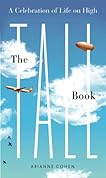
    The Tall Book: A Celebration of Life on High
    The Tall Book: A Celebration of Life on High by Arianne Cohen

    I’m on vacation. And I read The Tall Book: A Celebration of Life on High by Arianne Cohen today. Just sat down and read it, cover to cover, with a break for a fishing trip and dinner. Very pleasurable. I read sections aloud to my husband, to explain why I was laughing out loud. I learned a few things (why it can take generations to attain a genetic height potential, due to environmental effects passed down somatically)…and I definitely recognized a feeling and a pattern or two in this straight talking and funny book. Oh, and I’m quoted on pp. 169-170 (excerpt from my tall blog post).

    Arianne Cohen details how the tall and the super-tall are privileged misfits – commanding higher salaries on average, but unable to find clothes or seats that fit. I’ve always been a misfit – knees jammed into the back of the airplane seat ahead of me, not in any way average, despite my desire to blend in. Yet this book showed me lots of ways I’ve benefitted from this, and made me thankful for my own tall mom who showed me the ropes and who did not make me feel at all like a freak (who knew people gave hormone therapy to tall girls to keep them from realizing their height?!).

    I’m going to need a stack of these to share with tall friends, mothers of tall folk, those who love tall folk, and other humans. Learn more at TallBook.com.

  • Green disposal of technotrash (green #12)

    It’s sobering how much stuff we have, stuff we don’t need, stuff, stuff, stuff. Never more sobering than at moving time, when it is time to sort and pack and move all of it.

    We got into our new place on my Birthday last week, and in the last days we have been moving things over from one basement to another. We’ll move for real in mid-August, and we’re only moving stuff we don’t use daily, such as out of season clothing, Christmas ornaments and decorations, wrapping paper.

    We also unearthed a few things that had gone to die in our basement, including some toxic items such as an old computer monitor, fluorescent bulbs for former fish tanks, and a non-working dehumidifier.

    TVs and computer monitors for recycling, originally uploaded by exfordy.

    There are some that believe the easiest way to dispose of things is to toss them away, despite what they contain. But, I’m doing my best to emulate Dudley Do-Right, so I have tried to be careful.

    • I took our computer monitor to Best Buy for recycling (cost $10, but got a $10 gift certificate). They also took the old Tivo and a dead keyboard for free.
    • I mailed two unused PDAs to which we no longer had the power supplies and so couldn’t erase their memories to GreenDisk technotrash recycling. GreenDisk will recycle them in a secure way $6.95. I saw the service on the eWashtenaw computer recycling site.
    • I took our dehumidifier to the Recycle Ann Arbor Drop Off Station ($28 disposal fee to remove the freon). They also took the fluorescent bulbs ($2, $1/bulb).
    • I took other various metal containing items, a dead printer we’d forgotten about inside a cardboard box, styrofoam, tiny paperboard gift boxes, all sorts of stuff. Mostly free, $3 for assorted junk at the Drop Off Station.

    Of course, after my monster trip to “the dump,” I found another fluorescent bulb to take, but mostly our basement is now empty and ready for a thorough clean. Although I did have all of that junk in the first place, at least I did the best I could by getting rid of it. Miss Dudley Do-Right is $50 short, but alleviated of a lot of junk.

  • Rewards for reuse (green #11)

    Goodness is its own reward, but now and then there are actual, physical rewards for doing the right thing.

    We’re moving, so I’m trying to rid myself of items that are not in use. No sense moving them. The other week, I went on a Wednesday morning to pick up some flowers at the Ann Arbor Farmers Market. The Farmers Market typically sells flowers loose, so I brought my own vase. Well, the arrangement I fell for was at the only flower vendor that has vases. So, I asked if she could reuse the vase. She was happy to do so.

    reuse pays off
    Roses, traded for unused vases.

    On Saturday, I collected all of the unused vases from our basement, where they sat collecting dust after arriving with a flower arrangement. I boxed them up and brought them to the Farmers Market. And, the vendor traded me these lovely roses in return.

    Fun! The roses are sitting in a vase I didn’t give away, one we got from my college roommate Kris at our wedding. But, what a joy to get rid of unuseful stuff, get it to someone who valued it, and have these roses brighten my day

  • My cat, chanting, purring, and my experience at my meditation center

    I shared this story about my cat and my own experience chanting and becoming more joyful through chanting and meditation when I hosted a program earlier this month at the Siddha Yoga Meditation Center in Ann Arbor.

    My cat’s name is Floyd, and the reason I want to tell you about him is that my experience with him parallels a little bit my experience in Siddha Yoga. It’s a story of purring to share increasing comfort and joy.

    Close to 15 years ago, we adopted a stray cat. We were walking into the door of my apartment building, and a cat started calling to us. He came to us from across the little street, meowing the whole time. He was scrawny and bald in places where he plucked out his fur in response to flea bites. He looked ragged, and he was really hungry. He seemed sweet, not feral at all, and I brought him inside. He seemed to understand living with humans. He was hungry. He fattened up and his hair grew in and he remained a talker. He also had a very soft, very subtle purr. I recall being surprised by a cat with such a loud and demanding voice had such a tiny purr.

    Well, the other day I realized in an affectionate moment, that he has a much louder purr than I remembered when we first met. His purr is more fervent now. I think that over time, as his comfort level and his trust have deepened, and so has his purr. When he purrs, he draws me in. His purr expresses happiness and prompts me to give him more affection so that he’ll continue to purr.

    I did a little research on why cats purr. It was interesting. Cats purr as kittens when nursing, when receiving affection from us humans, and they purr sometimes when they are sick or scared. So, cats purr for communication, and depending how you interpret why ill cats purr, it is either for self-soothing or maybe healing. According to an article in Scientific American, the frequency of the vibration of the purring actually may help bone density and healing.

    Well, you might wonder where I’m going with this. As I thought about all of this, I thought about my own experience with Siddha Yoga and how I have opened up like he has, how tuning into his purring and the practices and has helped me enjoy life so much more.

    I showed up the doorstep of the Siddha Yoga Meditation Center just like that stray kitty, hungry for knowledge, hungry for peace of mind. I was restless, looking for something. I had always known I wanted to meditate. I tried a local class, and I ended up frustrated and sore from the sitting positions or asanas and no closer to the peace of mind I was seeking.

    At one point, I shared this urge with my scientific mentor. It turned out she also had a meditation practice and a community, this one, and she invited me to accompany her to a satsang one Thursday night.

    I arrived at the Siddha Yoga Meditation Center in Ann Arbor in late spring in 1998, right after the death of my father. That night, like most Thursday night satsangs, we chanted and sat for meditation.

    It was the chanting that caught me. I was struck by how the chant started solemnly. In those slow early verses, I experienced a lot of the sadness I was carrying around. But then, something magical happened, the chant sped up, and I found myself carried along with its momentum, and the end was fast and joyful and fun. And I had the experience of going along that entire arc. And I had the sense that by giving myself to the chant that I would be soothed, met in sadness and brought to joy. And I had the sense that when I was singing solemnly, I felt solemn. When I was singing joyfully, I experienced joy. I had thought it was the other way around, but acting in those ways drew forth that experience, drew forth that same energy from the world around me.

    I also found, as I still do, that the chants continued to give to me, sticking with me as melodies or words or just that lovely well being that I experience in the chant. The words or melody would popping back up in quiet moments, reminding me, reconnecting me to the experience, to joy.

    So, chanting was like my purring. It was and still is a form of self soothing, but it is also a practice of expressing and of cultivating joy, and drawing it to me and sharing it with others.