Author: Dunrie

  • What’s in a name? Industry groups differ on life science and biotech terms

    What’s in a name? Industry groups differ on life science and biotech terms

    Last week, I attended the Michigan Bio-Industry Growth Summit. The event bag included reports from sponsoring organizations MichBio, Business Leaders for Michigan, and the University Research Corridor. Attendees also received a report from the national Biotechnology Industry Organization (BIO). In these reports, I noticed some variation in names for the life science or biotech industry.

    Life science industry leaders use different names

    Handouts from the Bio-industry growth summit - showing different terms for life science or biotech
    Handouts from the Michigan Bio-industry Growth Summit – showing different terms for life science or biotech

    I imagine that in each report’s editorial meeting, a fair bit of time was spent selecting each noun and verb for the title and section headings. Perhaps MichBio went with Bio-Industry to be more inclusive of activities that broaden the definition of biotech, or to differentiate commercial activities from primary research, I’m not sure. They are the domain experts, so I trust their choice was for a good reason.

    I asked Google which name was “better”

    Yet, for Twitter and for my first post about the event, I opted for biotech. For Twitter, “biotech” was shorter than “bio-industry”, and short and sweet is better in that medium.

    When I got back to the office, I did more research. Google Trends gave me the popularity of these terms in searches. Google Trends aggregates all searches, and therefore emphasizes what the general public calls the industry.

    Worldwide and regional life science searches

    Since I published this post, the embeds no longer work well, so here’s a link to the Google Trends graphs of

    As you can see in the graphs, the terms “biotech” and “biotechnology” are more popular worldwide than life science, bio-industry, or biosciences. When we look only in the United States, life science searches are similarly popular to those for biotechnology, but biotech is consistently higher (except for September in each year when life sciences jumps up to or above biotech’s level). The Michigan data is noisier but appears similar to the US as a whole. In all regions, bio-industry and bioscience lag the other terms. If I keep playing with the terms, plurals matter for life science and biosciences, so I chose the most popular variant for these graphs – life science and biosciences.

    Closing Thoughts – specific vs. popular phrases

    The cross-industry groups, Business Leaders for Michigan and the University Research Corridor, used the more general and more popular term for the industry (life sciences) than did either of the associations with “bio” in their name. Over time, the bio-groups may teach the general population the new terms, search popularity is volatile. Yet, more commonly-used terms (e.g. biotech or life science) should go farther in the near term. Sometimes experts know and use too many words for our own good.

    By using “bio-industry”, MichBio might be limiting the reach of its Roadmap. MichBio’s Roadmap is a call-to-action to its members, it is speaking to other experts. Fine distinctions matter to experts, but they might muddy the communication to regular folks. The association and the Roadmap also needs to speak to non-experts—such as legislators and educators. If I were at that editorial meeting, I would have brought search data like this to the table and argued for the more commonly-used terms in the report title.

    When I tweeted about the event, I picked #biotech, but within Michigan, life science would have been just as popular and I chose that as the focus keyword for this post.

  • Michigan Biotech: MichBio Growth Summit – February 2016

    Michigan Biotech: MichBio Growth Summit – February 2016

    Industry association MichBio organized yesterday’s bio-industry growth summit in Lansing. This Michigan biotech event featured national and regional leaders, including legislators (agenda here).

    Michigan Biotech Roadmap for Success

    Table of Contents - Michigan Biotech Roadmap for Success
    Table of Contents – Michigan Bio-Industry Roadmap for Success

    MichBio also launched their Michigan Bio-Industry Roadmap for Success. This roadmap was developed through interviews, focus group, surveys, and comparison to peer states.

    Event attendees received a print copy of the executive summary for the roadmap (~40 pages), still fragrant from the printer. Director Stephen Rapundalo, Ph.D., presented the highlights to the attendees. The Roadmap provided competitive benchmarking of Michigan in total bio-industry employment, expenditures, grants, patents, and venture capital. For employment, the roadmap breaks the bio-industry category into subcategories, specifically:

    • agri-biosciences,
    • drugs & pharmaceuticals,
    • medical devices & equipment,
    • research, testing & medical laboratories, and
    • bioscience-related distribution (logistics).

    The roadmap evaluated Michigan’s rank and then provided specific recommendations for industry growth, business climate, innovation, education & talent, and access to capital. Rapundalo announced that a full version of the Roadmap should be released this month. I will post a link to any online documents here if/when they become available.

    Recurring Themes – Michigan Biotech Education and Talent

    A recurring theme from the panel and from attendees was talent. Panelists called for biotech-oriented education for entry-level positions. Panelists discussed having to recruit talent back to Michigan from the coasts for senior/specialized biotech leadership positions.

    Being a digitally-focused person, I did some live-tweeting of the event and made sure to connect in person with others who were tweeting. Here are a few example tweets from my own and others takeaways from the event.

  • Gone Back to School

    Gone Back to School

    I’ve gone back to school, college actually.

    [066/365] Back to School
    Back to School, made available via Creative Commons by Leland Francisco on Flickr
    I’m pulling down the shingle here at Scientific Ink for the next several months. I’ve taken a position at Washtenaw Community College – I will be Interim Executive Director of Marketing & Web Services through January 2016. This new position will keep me busy enough that I will not be taking on client projects.

    Thanks and keep in touch!

  • Gaming the System: have we reached peak customer experience survey?

    Gaming the System: have we reached peak customer experience survey?

    Surveying the customer seems like a good idea to find out ways to improve. Yet, I’ve been on the receiving end of customer experience surveys that show me we’re doing it all wrong.

    Anyone who has purchased a car or who has had their car serviced recently by a car dealership is likely aware of the 10-point customer experience survey that arrives, via email, after the dealership visit. Other interactions with their customer service (say to troubleshoot the connection between said new car and the proprietary little app system that runs the electronics) also trigger a “rate our customer service” email. All these chances to provide feedback are good, right? Nope.

    When each interaction with your service creates more work for me, the customer, I wonder. Also, the sales operation doesn’t feel open to actual feedback, it seems they’re only interested in the goal – getting the top mark. They show this in unsubtle ways. Visual cues for how the dealership would like to be rated are on the back of the salesman’s cubicle and on the wall facing the seats in the service department waiting area.

    Coaching poster about the customer experience survey in the dealership.

    Before I switched to a Chrysler product, I had a car with another brand name. And that dealership sent very emotive letters ahead of the survey, essentially saying if you cannot give us a 10, please let us know so we can correct it before you fill out the survey. Basically, let’s keep this between us, don’t tell Papa Franchise/OEM about any frustration.

    Please give us a "5" rating on the question with a 5-point scale. (The 0-4 scores don't count and we want your rating to count!)
    Please give us a “5” rating on the question with a 5-point scale. (The 0-4 scores don’t count and we want your rating to count!)

    Earlier this year, I got this form stapled to my receipt at the drugstore. It says that I may receive a survey, and if I don’t answer a 5 (top score for them) my response “won’t count”!

    This pharmacy’s assertion that a rating below “5” won’t count cannot be true, and this note is the opposite of customer service. It’s just forcing the customer to be involved in gaming a corporate system. Yuck. With the people who are the subject of the surveys (sales and customer service folk) specifically asking to subvert the intention of the survey….how can we take this data seriously?

    We know from online ratings that people really don’t bother to review a company or an experience unless they’re thrilled or torqued off. Yet, most of the experiences we have with brands, stores, and car dealers are somewhere in the middle of horrid to spectacular. It’s unrealistic to expect they’ll be spectacular 10.0 across the board all of the time. And it’s particularly silly to ask your customer to enable this charade.

    Don’t bother your customers

    Bothering the customer to give you top marks on a survey isn’t a good customer experience.

    I’ve started a new behavior in response to this: I won’t fill these silly things out.

    If I can’t give the customer service top marks, but it isn’t the agent’s fault (e.g. the issue is mechanical or technological) I have a hard time rating the interaction at all. I can’t give it a 10 because I’m still unsatisfied. But the agent was nice and at least sympathetic to the weirdness of the [insert technical or mechanical issue here]. So, should I be honest and say they’re eroding my faith in their brand but they hire friendly people to take the hit? That’s not an option in the survey, so I just delete the customer experience surveys now.


  • Customer Service: Actions “behind the scenes” matter to customer experience

    Customer Service: Actions “behind the scenes” matter to customer experience

    What is your team doing when they aren’t “customer-facing?” Hint, it influences the customer experience too.

    Welcome
    Welcome, made available by halfrain via Creative Commons on Flickr

    There is a fancy grocery in Ann Arbor where I sometimes shop (and that will go unnamed). Generally, the folks here are friendly at the cash registers and at the cases where I order seafood, meat, or prepared food. Yet, I’ve noticed that the staff at this grocery are in a hurry when they’re in the aisles. When I’m shopping with a cart, I’ve had to “pull over” and wait for staff hurrying by to pass me.

    When this happens, I wonder what’s so important in the back room—a smoke break, the punch clock, or an angry manager? I imagine that the store’s leadership has stressed quickness or efficiency over courtesy (a customer experience failure). In my head I rewrite my shopping list to frequent other stores.

    There is another “fancy” place in town – Zingerman’s. I visited a friend at the Zingerman’s Bakeshop recently, and he walked me around behind-the-scenes. Everywhere we went in the facility, people stopped what they were doing (at their computers, wheeling a hand truck through a loading area…) and greeted me. I’m sure they had as much to do as the staff at the other location, yet they weren’t in a rush, seemed genuinely glad to meet me, and meeting each of them was a pleasure.

    Zingerman’s has published their mission and guiding principles. They emphasize two relevant phrases in their mission:

    “giving service that makes you smile” and

    “showing love and care in all our actions.”

    Through stopping to greet me, the Zingerman’s team exemplified courtesy and the mission of the company. While I didn’t yearn for a chat with the team at the other store, I would prefer not to feel “in their way.” I don’t shop there as often as I might, and I don’t want to work there.

    So the question becomes—what values do you promote in your organization? Values and intention matter whether it is a knitting group, a writing circle, a start-up, or an established business.

    What experience do you want newbies, visitors, new team members, and the old guard to experience? Because it is those values that shape the behavior of your team and the experience of your customers.

  • Customer Service: A Name, My Name, is Important

    I have a difficult name – the first and the last names are unfamiliar. I haven’t met another Dunrie, and the only Greilings I have ever met are relations. People mess up the spelling, they don’t know how to hear it, they think Dunrie is my last name a lot and ask for my first name.

    I’ve developed a few patterns to try to avoid certain common misconceptions about my name. It’s often misheard as “Dumrie” instead of Dunrie, so when I spell it out, I often say “N as in Nancy.”

    Well, I went to a neighborhood coffee shop last week, after the morning rush. I was the only person in line and the cashier (who, I believe, is also the owner) asked me my name to keep with the order. She started to write “D U” on the slip, and then when she heard “N as in Nancy” she crossed off the D and the U and said, “I’ll put it under Nancy.”

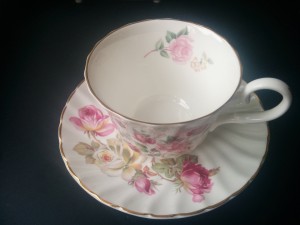
    rose teacup and saucer
    I like tea. I also like my actual name.

    What I should have said was, please don’t. People have special sense for their name. I would have heard Dunrie when the barista called it into the noisy coffee shop. I had to listen for Nancy. Besides, there was no one behind me, so I’m not sure what the personal or professional loss would have been to attend to the last four letters of my actual name.

    What did I say? Nothing. I moved along, listened for “Nancy” and took Nancy’s fancy tea latte. I felt cross and misunderstood. Efficiency 1; Customer Service 0.

    It’s a Dale Carnegie truism that almost nothing is more melodious to a person than her name. Maybe the shop owner was having a bad or busy moment that wasn’t obvious to me. Yet, it’s hard to make me feel more unwelcome in your shop than refusing to get my name right.